Snoran Plus Review (2026): Does This Natural Snore Stopper Actually Work?
Certified Strength & Conditioning Specialist (CSCS) & Lead Reviewer at Go Fit Base · CSCS (NSCA), CISSN (Sports Nutritionist) · 8+ Years Fitness & Sports Nutrition Coaching
Snoring is easy to mock and hard to live with. It fragments your sleep, drains your mornings, and turns bedtime into a negotiation. So when a capsule promises to quiet the noise without a mask, a mouthpiece, or a strip across your nose, it is worth asking a hard question: is there anything inside that bottle that actually addresses the cause?
This Snoran Plus review breaks down what the product is, how its formula is supposed to work, where the logic holds up, where it doesn't, and how it compares with the devices most people try first. No hype — just the trade-offs you need before spending money.
Key takeaways
- Snoran Plus is a dietary supplement, not a drug or a medical device.
- Its formula targets congestion, mucus, and airway inflammation — a narrow slice of the snoring picture.
- It cannot reposition a jaw, hold a collapsed airway open, or treat sleep apnea.
- Best-case users are mild, congestion-driven snorers; worst-case users waste a few months on the wrong fix.
What Is Snoran Plus?
Snoran Plus is a once-daily capsule sold as a natural anti-snoring aid. Rather than physically propping open your airway the way a nasal dilator or mandibular advancement device does, it works internally — the marketing frames it as support for the respiratory tissues themselves.
| Attribute | Detail |
|---|---|
| Format | Swallow capsule, taken daily |
| Category | Dietary supplement (not FDA-approved as a drug) |
| Claimed angle | Reducing airway inflammation and mucus buildup |
| Key ingredients | Peppermint, eucalyptus, thyme, marshmallow root, goldenseal, vitamin B12, niacin |
| Dietary claims | Non-GMO, gluten-free, soy-free (per label) |
| Prescription required | No |
| Where it's sold | Official website, typically in multi-bottle bundles |
Two things are worth flagging immediately. First, "natural" describes the source of an ingredient, not its safety profile or effectiveness — a point the U.S. Food and Drug Administration makes clear in its guidance on dietary supplements, which are not reviewed for efficacy before sale. Second, formulas change. Always read the label on the bottle you actually receive rather than trusting a review, including this one.
Why Snoring Happens (and Why That Matters Here)
Snoring is a sound, not a diagnosis. It is produced when air moves through a narrowed passage and makes soft tissue vibrate — the soft palate, the uvula, the base of the tongue, or the walls of the throat.
The narrowing usually comes from one of four places:
- Nasal obstruction — congestion, allergies, a deviated septum, swollen turbinates.
- Throat muscle relaxation — alcohol, sedatives, deep sleep, and aging all relax the pharyngeal muscles.
- Anatomy — a recessed jaw, a large tongue base, enlarged tonsils, excess neck tissue.
- Sleep position — back sleeping lets gravity pull the tongue and soft palate backward.
This matters because Snoran Plus can only realistically influence one of those four. A capsule can plausibly affect mucus thickness, tissue inflammation, and nasal congestion. It cannot shrink your tonsils or stop your tongue from falling backward.
If your snoring comes from a blocked nose — the kind that worsens during allergy season or a cold — an internal approach is at least logically coherent. If it comes from anatomy, you are solving the wrong problem.
How Snoran Plus Claims to Work
The manufacturer's stated mechanism rests on three ideas.
1. Calming inflamed airway tissue
Peppermint and eucalyptus are both traditional demulcents and anti-irritants. Menthol, the active compound in peppermint, stimulates cold-sensing TRPM8 receptors in the nose — which is why it produces a strong sensation of clearer airflow. That sensation is real, but in practice it is partly perceptual: the airway doesn't always open wider just because it feels like it does.
2. Thinning and clearing mucus
Eucalyptus and thyme have long histories as expectorants in cough and cold preparations. The theory is that less mucus means less resistance, which means less turbulent airflow and less vibration.
3. Supporting sleep depth through B vitamins
Vitamin B12 and niacin (B3) are included for nerve function and energy metabolism. This is the weakest link in the chain — B vitamins support general health, but there is no meaningful evidence that they reduce snoring. Note too that niacin can cause a harmless but noticeable flushing sensation in some people.
The honest summary: the formula is built around congestion relief. That is a legitimate target, just a limited one.
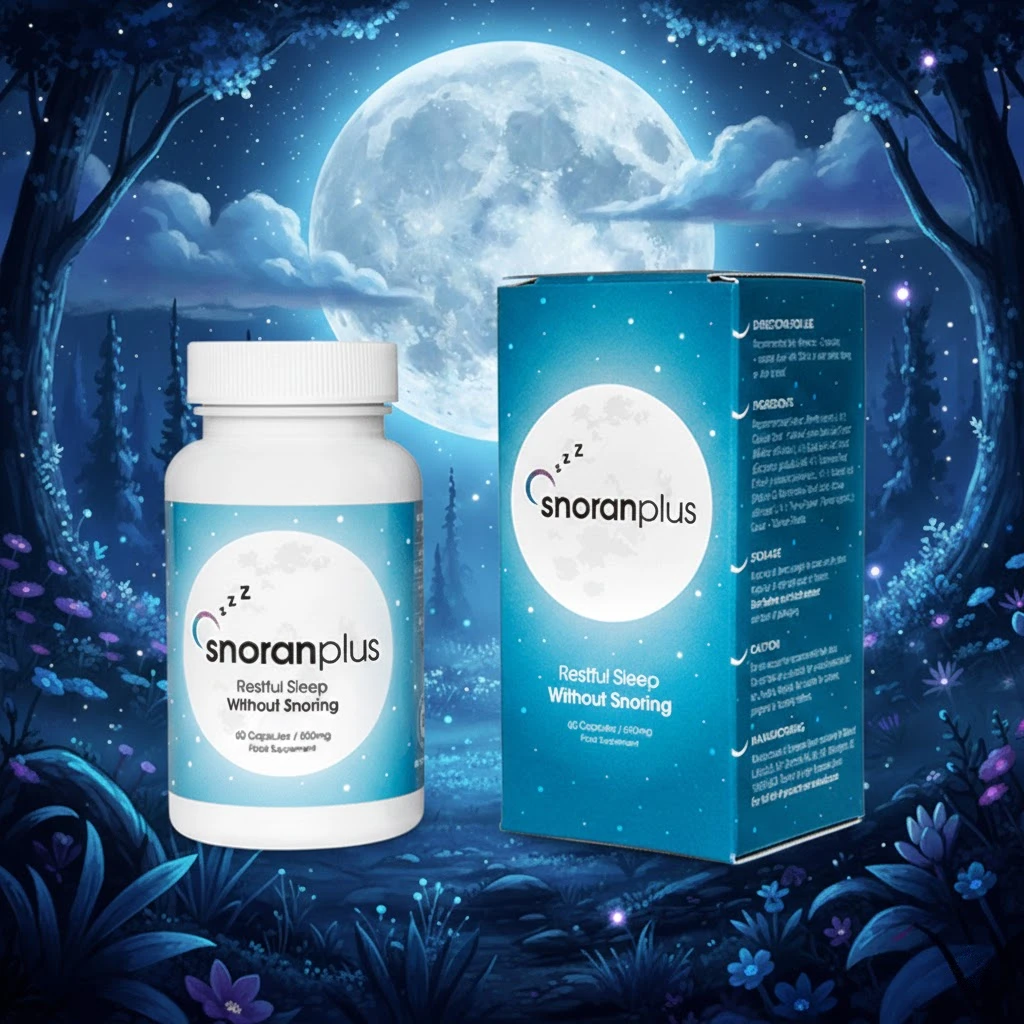
Snoran Plus is sold as a daily capsule, not a wearable device — which is both its main appeal and its main limitation.
Ingredient Breakdown: What's Actually Inside
| Ingredient | Traditional role | Relevance to snoring |
|---|---|---|
| Peppermint leaf extract | Cooling, anti-irritant; menthol activates cold receptors | May ease the feeling of congestion; limited effect on airway diameter |
| Eucalyptus leaf extract | Expectorant containing 1,8-cineole | May loosen mucus; commonly used in respiratory preparations |
| Thyme powder | Contains thymol; traditional upper-respiratory support | Modest antimicrobial and soothing properties |
| Marshmallow root | Mucilage-rich demulcent | Coats and soothes a dry, irritated throat |
| Goldenseal | Contains berberine; traditional mucous-membrane remedy | Anti-inflammatory in theory — but berberine can interact with medications |
| Vitamin B12 | Nerve function, red blood cell formation | No direct snoring mechanism |
| Niacin (B3) | Energy metabolism, circulation | No direct snoring mechanism |
A common mistake shoppers make is assuming that because each herb has a traditional use, the combination has been tested as a snoring treatment. It hasn't. There is no large randomized trial of this specific blend against snoring as an endpoint. Each ingredient has its own small body of research, mostly in cold, cough, or sore-throat contexts — a meaningful gap between "soothing" and "stops snoring."
How We Evaluated Snoran Plus
To keep this review useful rather than promotional, we weighed five things:
- Mechanism plausibility — does the ingredient list map onto a known cause of snoring?
- Evidence quality — traditional use versus controlled trials.
- Risk profile — allergens, drug interactions, and long-term safety signals.
- Practicality — cost, consistency required, and how long a fair trial takes.
- Boundaries — what the product explicitly cannot do, and whether the marketing is honest about that.
On mechanism and risk, Snoran Plus scores reasonably. On evidence quality, it is unproven. On practicality, it demands patience.
Pros and Cons
| Pros | Cons |
|---|---|
| Non-invasive — no mask, strap, or mouthpiece | Requires daily use for weeks before you can judge it |
| Drug-free, no sedatives or habit-forming compounds | Results vary widely and are unproven in trials |
| Targets congestion rather than masking sound | Sold mainly online, so returns depend on the seller's policy |
| Free from gluten, soy, and GMOs (per label) | Not a treatment for obstructive sleep apnea |
| Low barrier to trying compared with devices | Some ingredients can interact with medication |
Who Snoran Plus Is Actually For
Snoran Plus makes the most sense for mild, situational snorers:
- People whose snoring gets worse during allergy season or a cold.
- Mouth breathers who wake with a dry, scratchy throat.
- Light snorers who want to avoid a device on their face or in their mouth.
- Partners of light snorers looking for a low-stakes first attempt.
It makes much less sense if you fall into any of these groups:
- You have suspected sleep apnea. Gasping, choking, witnessed pauses in breathing, morning headaches, or uncontrollable daytime sleepiness are not snoring problems — they are medical ones. The National Heart, Lung, and Blood Institute maintains patient resources on sleep apnea, and a sleep study is the right next step, not a supplement.
- You are pregnant, nursing, or managing a chronic condition without medical clearance.
- You take prescription medication. Goldenseal (berberine) can affect how the liver processes certain drugs.
- Your snoring is anatomical. A recessed jaw or large tongue base will not respond to a capsule.
Women going through menopause-related sleep changes often snore more due to shifting hormone levels, and older men dealing with night-time bathroom trips frequently have fragmented sleep that makes snoring worse. Neither pattern is fixed by airway supplements alone.
How to Take It for a Fair Test
If you decide to try it, test it properly rather than guessing.
- Follow the label exactly. Do not double up to "speed things up" — more is not better with herbal extracts.
- Take it at a consistent time each day. Some users prefer before bed; others find niacin flushing disruptive at night, so experiment early on.
- Give it the full window. Two to four weeks is a realistic minimum. One night proves nothing.
- Measure it. Record snoring volume with a phone app, or ask your partner for a simple nightly rating. Memory is a terrible judge of sleep.
- Change nothing else for two weeks. If you simultaneously start nasal rinses and a new pillow, you learn nothing about the capsule.
The habits that matter more than any capsule
A supplement is a small lever. These are bigger ones:
- Alcohol timing. Alcohol relaxes throat muscles and is one of the most common triggers. Aim to finish drinking at least three to four hours before bed.
- Sleep position. Back sleeping is the worst position for most snorers. A body pillow or a sewn-in tennis ball trick works surprisingly well.
- Nasal hygiene. Saline rinses and humidity control address congestion directly — the same problem Snoran Plus claims to target.
- Weight and neck circumference. Even modest changes can reduce tissue pressure on the airway.
- Stress and winding down. Tension and anxiety fragment sleep and worsen breathing patterns; a structured calming evening routine or a stress-driven sleep issues support supplement can help the sleep side of the equation, even if it does nothing for snoring itself.
If you've addressed all of the above and you're still snoring, that's a strong signal the cause is structural — and worth a professional assessment.
What to expect in the first month
Realistically, users who respond tend to notice one of three things: a slightly drier throat in the morning, less nasal stuffiness, or a partner reporting quieter nights. What they generally don't notice is energy returning overnight. When sleep does improve, daytime benefits tend to follow — clearer thinking, better memory and concentration, and daytime energy levels that don't collapse by mid-afternoon.
And if sleep stays broken, the effects go the other way. Chronic poor sleep shows up as irritability, tired, strained eyes, and difficulty sharpening daytime focus — which is usually what pushes people to search for a solution in the first place.
Snoran Plus vs. Other Anti-Snoring Options (2026)
| Option | How it works | Best suited to | Comfort | Reusable |
|---|---|---|---|---|
| Snoran Plus | Oral capsule targeting congestion and inflammation | Mild, congestion-driven snoring | High (no device) | N/A |
| Mandibular advancement device | Holds the lower jaw forward to keep the throat open | Jaw- or tongue-based snoring | Low–medium; needs adjustment | Yes |
| Nasal dilator | Inserted internally to widen the nostrils | Nasal valve collapse | Medium | Typically short lifespan |
| Nasal strip | Adhesive lifts the outer nasal wall | Cold- and allergy-related snoring | Medium | Single use |
| Positional therapy | Prevents back sleeping | Positional snorers | Medium | Yes |
| CPAP | Delivers pressurised air to keep the airway open | Diagnosed obstructive sleep apnea | Medium; adherence varies | Yes |
Quick guidance:
- Pick a capsule if your snoring tracks with congestion and you want zero hardware.
- Pick a jaw device if your partner describes choking or snorting rather than whistling.
- Pick a nasal strip for temporary relief during a cold.
- Pick CPAP only through a proper diagnosis — it is a medical treatment, not an off-the-shelf remedy.
Side Effects and Safety
Snoran Plus is generally well tolerated, but "natural" does not mean risk-free.
- Peppermint and menthol can trigger heartburn or reflux in sensitive people — a problem if you already sleep badly.
- Goldenseal (berberine) is the ingredient to watch. It can influence liver enzymes that metabolise prescription drugs, including some blood thinners, antidepressants, and diabetes medications.
- Niacin can cause flushing, warmth, or tingling shortly after a dose. It's harmless for most people but unpleasant if unexpected.
- Allergies to thyme, eucalyptus, or mint-family plants are uncommon but real. Check the label before your first dose.
- Pregnancy and nursing — skip it unless your doctor clears it.
Stop and speak to a clinician if you develop any unusual reaction. And if snoring is accompanied by gasping or pauses in breathing, stop reading reviews and book an appointment.
Price, Availability, and Refund Policy
Snoran Plus is sold primarily through its official website, usually in single-bottle, multi-bottle, or bundled packages that lower the per-bottle cost. A few practical notes:
- Buy from the official source. Third-party marketplace listings for supplements are frequently expired, repackaged, or counterfeit.
- Check the guarantee before ordering. Return windows vary by seller and by bundle size, and opened supplement bottles are often excluded.
- Factor in the trial length. Because a fair test takes three to four weeks, a single bottle only makes sense if the refund terms let you judge it honestly.
Check current pricing and bundle options on the official Snoran Plus page — the multi-bottle tiers are where the per-day cost drops meaningfully.
Frequently Asked Questions
How long does it take to see results?
Some users report a difference within the first few nights, but that early impression is unreliable — it's easy to confuse the cooling sensation of menthol with an actual reduction in snoring. A fair trial is two to four weeks of consistent use, ideally measured with a snoring app or a partner's nightly rating rather than memory.
Is Snoran Plus a cure for sleep apnea?
No, and it isn't marketed as one. Obstructive sleep apnea is a medical condition in which the airway repeatedly collapses during sleep, causing oxygen drops and fragmented rest. It requires diagnosis and, usually, CPAP, an oral appliance, or surgery. If you experience gasping, choking, or witnessed pauses in breathing, see a doctor.
Are there side effects?
Most users tolerate it well. The most common complaints are mild digestive upset or reflux from peppermint, and temporary flushing from niacin. Goldenseal is the ingredient most likely to interact with prescription medication, so check with a pharmacist if you take anything daily.
Do I need a prescription?
No. It's classified as a dietary supplement, so it can be purchased directly. That also means it hasn't been evaluated by the FDA for effectiveness — a lower regulatory bar than a prescription drug clears.
Can I take Snoran Plus with alcohol?
There are no widely reported direct interactions, but alcohol is one of the strongest snoring triggers there is. It relaxes the muscles lining your throat, so drinking close to bedtime can cancel out any benefit. Leave at least three to four hours between your last drink and sleep.
Can I take it alongside other supplements or medication?
Many people do combine supplements, but "widely combined" is not the same as "verified safe." Goldenseal in particular deserves a pharmacist's opinion if you take prescription drugs. Bring the actual bottle to the counter — ingredient names matter more than brand names.
Is it safe for long-term use?
There's no established long-term safety data on this specific blend. Botanical formulas like this are generally used in cycles rather than indefinitely. If you've taken it for several months with no change in your snoring, the sensible move is to stop and investigate the real cause.
Why doesn't it work for everyone?
Because snoring has multiple causes and a capsule only reaches one of them. Mucus and mild inflammation respond to oral ingredients; a receding jaw, a bulky tongue base, or enlarged tonsils do not. If three to four weeks of consistent use changes nothing, the cause probably isn't congestion.
Final Verdict: Is Snoran Plus Worth It?
Snoran Plus is a reasonable, low-risk option for one specific problem: mild snoring driven by congestion, dryness, and irritated airway tissue. It's convenient, non-invasive, and built around ingredients with long traditional use in respiratory care. For a light snorer who wants to avoid a mouthpiece or a strip, it's a defensible first try.
It is not a universal fix, and the marketing occasionally blurs that line. No capsule can hold a collapsing airway open, and no B vitamin will stop your tongue from falling backward. If your snoring is loud, positional, or accompanied by gasping, the money is better spent on a sleep evaluation than on another bottle.
The honest test is simple: give it three to four weeks, change nothing else, measure the results, and stop if nothing moves. That approach will tell you more than any review — including this one — ever could.
See the current Snoran Plus offer and refund terms on the official site if you want to run that test yourself.

Similar Posts