Brain Actives Review: Does The Brain Actives Food Supplement Really Boost Focus?
Certified Strength & Conditioning Specialist (CSCS) & Lead Reviewer at Go Fit Base · CSCS (NSCA), CISSN (Sports Nutritionist) · 8+ Years Fitness & Sports Nutrition Coaching
Brain Actives is marketed as a 10-ingredient nootropic capsule for people who need to stay sharp through long study sessions, demanding workdays, or intense training. The promise is familiar: less brain fog, faster recall, steadier energy — without the crash that follows a double espresso or an energy drink.
This review takes that promise apart. We look at what the product actually is, how its proposed mechanisms line up with the wider nootropic research, how the label should be read, what a realistic results timeline looks like, and where the honest limitations sit. No hype, no invented study data — just the information you need before spending money.
If you want the short version first, the table belowsummarises the verdict. The rest of the article explains the reasoning.
Quick Verdict at a Glance
Question Short answer
What is it? A capsule-format nootropic "food supplement" built around a 10-ingredient blend
Main marketing claims Sharper focus, better memory, quicker reactions, clean energy
Evidence for the finished formula No publicly available independent clinical trial on this exact blend
Evidence for the ingredient categories Mixed — some components are well studied, others have thin human data
Who it suits best Healthy adults already sleeping and eating well who want a small edge
Who should skip it Pregnant or nursing women, people on prescription medication, anyone expecting an ADHD treatment
Typical starting dose Follow the label; most nootropic capsules are taken once daily with water and food
Realistic first effects Subjective alertness within an hour for some users; memory-type benefits over weeks, if at all
Buying Official website only — third-party listings carry counterfeit risk
What Is the Brain Actives Food Supplement?
Brain Actives sits in the nootropic category — supplements positioned to support cognitive performance rather than treat a medical condition. It ships as easy-to-swallow capsules and is sold primarily through its own official store, which the manufacturer frames as a quality-control measure.
One detail worth knowing: the phrase "food supplement" is a regulatory label used in the UK and EU, while the same product category is called a "dietary supplement" in the United States. The naming difference matters because the rules are different. In the US, supplements are regulated as a subcategory of food, and they do not need pre-market approval for effectiveness — which is why you should treat any cognitive claim on a bottle as marketing until proven otherwise. The U.S. Food and Drug Administration publishes the framework that governs this, and it is worth a read if you buy supplements regularly.
The formula is described as a complex of 10 active ingredients chosen for synergy. In practice, "synergy" is the hardest claim to verify in any nootropic, because it would require testing the blend as a whole — not just the individual components. Keep that in mind as you read the benefit list below.
One more practical point: "food supplement" also tells you what the product is not. It is not a medicine, it has not been through the efficacy testing a drug would face, and the manufacturer is not permitted to claim it treats, cures or prevents anything. That is not a knock on Brain Actives specifically — it is true of the entire shelf. The useful takeaway is that any nootropic, this one included, belongs in the same mental bucket as a multivitamin or a protein shake, not the same bucket as a prescription.
How Brain Actives Claims to Work
The marketing centres on three broad mechanisms. Each has a plausible biological basis, but the strength of the evidence varies enormously by ingredient.
Neurotransmitter support. Many nootropic blends include amino acid precursors such as L-tyrosine, which the body uses to build dopamine and noradrenaline. These pathways are real, but supplementing them does not automatically raise brain levels in a healthy, well-fed adult.
Cerebral blood flow. Botanicals like ginkgo biloba are often included on the theory that better circulation means better oxygen and nutrient delivery to neurons. Human trial results here have been inconsistent.
Energy metabolism. B vitamins and compounds involved in mitochondrial function are common inclusions. They help correct a deficiency, but they do not act as a stimulant in someone who already has adequate levels.
A common mistake buyers make is assuming that because each ingredient appears in a research paper, the finished product has been tested. It has not — at least not in any trial the public can inspect. That does not mean it cannot work; it means the claim rests on ingredient-level reasoning, not on product-level proof.
There is a fourth, quieter mechanism worth naming: some blends lean on adaptogens — botanicals such as rhodiola, ashwagandha or schisandra — that are included less for raw stimulation and more for how the body handles stress load. The logic is indirect (steadier stress response, steadier attention), and the human data is mixed, but for anyone whose focus problems flare specifically during high-pressure weeks, it is the most plausible category in the whole formula. In practice, adaptogen effects are the slowest to appear of any ingredient class: think weeks, not hours, and never judge them from a single dose.
Common Ingredients in a 10-Ingredient Nootropic — and What the Evidence Says
Because Brain Actives is built around a ten-part blend, it helps to know what typically goes into a formula of that size — and how much weight each category can realistically carry. Most ten-ingredient nootropics draw from the same shortlist:
Amino acid precursors. L-tyrosine and L-theanine are the usual two. L-theanine in particular has decent evidence for smoothing the jittery edge of caffeine without sedating you; tyrosine's evidence is stronger for restoring performance under acute stress (cold, sleep loss, multitasking) than for boosting a rested brain.
Cholinergic support. Citicoline, alpha-GPC or huperzine A, aimed at acetylcholine signalling. The doses used in studies are often far higher than what fits into a multi-ingredient capsule, so this is a category where proprietary blends hide the most.
Circulatory botanicals. Ginkgo biloba and vinpocetine appear frequently. Effects on healthy cognition are small and inconsistent in the literature.
Adaptogens. Rhodiola, bacopa and ashwagandha. Bacopa has the most consistent — if modest — memory signal, but typically only after eight to twelve weeks of daily use.
B-vitamin and mineral cofactors. B6, B12, folate and sometimes magnesium or zinc. These matter enormously if you are deficient and barely at all if you are not.
Mineral-rich adaptogens. Ingredients such as shilajit are included on the theory that trace minerals and fulvic acid compounds support mitochondrial energy production; our notes on fulvic-acid supplements summarise what that research does and does not show.
The honest framing: a ten-ingredient blend is a portfolio bet. You are buying a small possibility of benefit from several mechanisms at once, not a guaranteed effect from any single one. That is a legitimate strategy for a general-purpose product — but it also means you should never pay extra for an ingredient you cannot verify at a meaningful dose.
Reading the Brain Actives Label: What Actually Matters
Before you judge any nootropic, the label tells you more than the sales page does. Here is the checklist worth applying to Brain Actives — or to any comparable memory blends you are comparing it against.
Total caffeine content. If the blend contains caffeine or a caffeine-containing botanical such as green tea extract, that single number will explain most of the "focus" you feel. Check it against your daily coffee intake.
Proprietary blend or disclosed doses? A proprietary blend lists ingredients under one total milligram figure without individual amounts. That makes it impossible to know whether you are getting a clinical dose or a token sprinkle. Disclosed doses are always the stronger sign of quality.
B vitamin forms and amounts. Look for methylfolate and methylcobalamin rather than only folic acid and cyanocobalamin. Also check that B6 is not dosed absurdly high — prolonged megadoses can cause nerve problems.
Herbal extract standardisation. "Bacopa extract" means little; "bacopa extract standardised to 50% bacosides" tells you something measurable.
Allergens and excipients. Capsules need fillers. Rice flour, cellulose and magnesium stearate are common and generally fine; check the allergen line if you have sensitivities.
If you cannot find these details on the product page, ask customer support for the full supplement facts panel before ordering. A manufacturer confident in its formulation will supply it.
One extra habit separates careful buyers from impulse buyers: compare the label against a competing product line by line, not page by page. Put the disclosed doses of two or three blends side by side and the pattern becomes obvious — one product will typically have two or three ingredients at meaningful amounts and a long tail of decorative ones. If Brain Actives (or a rival) will not disclose individual doses, that alone is a legitimate reason to keep shopping, because you cannot make the comparison at all.
Key Features and Benefits — With Realistic Expectations
Memory and concentration
The core pitch is that Brain Actives helps you hold a train of thought without drifting. In practice, this is the kind of benefit users tend to describe subjectively — "I felt more present" — rather than measure. Genuine memory improvement from a supplement is slow and modest; the interventions with the strongest evidence for recall are sleep, aerobic exercise, and managing stress. A capsule can support those habits, but it will not replace them.
If you want to know whether a memory claim is even plausible, ask what kind of memory is being discussed. Working memory — holding a phone number in your head for ten seconds — is highly sensitive to sleep and stress, and can shift noticeably within a single week. Long-term episodic memory, the kind you notice when you forget names, moves on a months-long timescale and is far harder to move with a capsule. Marketing copy almost never makes this distinction, and it is one of the fastest ways to tell a serious claim from a vague one.
Faster learning and information processing
Students and professionals often buy nootropics hoping to compress study time. The realistic version of this benefit is slightly smoother attention during a study block, not photographic absorption of a textbook. If you are studying for exams, the order of operations should be: fix sleep first, then nutrition, then consider a supplement as a small multiplier.
A useful self-check before you spend anything: log how many hours of genuinely focused study you complete in an average week right now. Attention is usually limited by interruptions and fatigue, not by raw processing speed — which means removing phone notifications for two hours a day will move your study output more than a capsule will, at zero cost.
Reaction time and the mind-muscle connection
For athletes and competitive gamers, reaction time matters. Some nootropic ingredients are included specifically for alertness and neuromuscular signalling. Expect a marginal, not dramatic, difference — and remember that dehydration and fatigue will cost you far more milliseconds than any capsule will return. If your training leaves you flat all day, it is worth checking whether your overall energy and hormone picture needs attention rather than adding another pill; products like those covered in our review of daily energy support address that side of the equation.
Reaction time is also the easiest cognitive metric to measure at home, which makes it the fairest way to test a nootropic for yourself. A simple human-benchmark style reaction test, run three times a week at the same time of day, will tell you more in a fortnight than a month of "I think I feel sharper" ever will. Just be aware that reaction-time scores improve with practice on the test itself — so establish your baseline for a week before starting the supplement.
Energy without the jitters
The "no crash" angle is one of the product's strongest selling points, and it is also where formulation matters most. A blend built around B vitamins and amino acids will feel very different from one built around 200 mg of caffeine. If you are sensitive to stimulants, read the label carefully — and if you have previously reacted badly to stimulant-based diet pills, apply the same caution here.
Worth saying plainly: "no crash" is not the same thing as "more energy." A stimulant creates energy; a nutrient blend mostly removes small drags on the energy you already have — a marginal B-vitamin shortfall, a mild hydration deficit, a blood-sugar dip mid-afternoon. That distinction explains a lot of the split in user reviews. People who were running slightly deficient feel a real difference; people who were already well-fuelled often feel nothing at all.
Synergy: why ten ingredients is not automatically better
More ingredients means more chances for a useful interaction — and more chances for a sub-clinical dose of each. A ten-ingredient blend where each component sits at one-tenth of its studied dose is not ten times better than a single-ingredient product; it may be weaker. This is the single biggest question mark over Brain Actives and every product shaped like it.
There is a counter-argument worth acknowledging, though. Some combinations genuinely do work better together — caffeine plus L-theanine is the best-documented example, where the amino acid smooths the stimulant's edge without cancelling its alertness benefit. Small doses of several ingredients can also stack additively even when none is individually at a "studied" dose. The catch is that both of these effects require a formulator to have chosen the doses deliberately and to have documented the thinking. Without a disclosed label, you simply cannot tell a thoughtful stack from a marketing checklist, and that uncertainty is what you are being asked to pay a premium for.
Who Should Consider Brain Actives — and Who Should Skip It
Likely a reasonable fit:
Professionals managing long meetings, deep-work blocks or shift patterns.
Students who already have a study routine and want steadier attention during it.
Athletes and gamers looking for a small edge in alertness and reaction speed.
Adults in their 40s and beyond who notice normal, age-related slowing and want general support.
If you fall into that last group, it is worth separating two very different situations. Ordinary age-related slowing — slightly slower recall of names, needing a second to find a word — is normal and responds modestly to sleep, exercise and social engagement. A genuine hormonal shift is a different conversation entirely, and one a supplement bottle is not equipped to answer; if energy, mood and motivation have all dropped together, that is worth raising with a clinician, and men's vitality support is the kind of category to research only after you have had bloodwork done, not before.
Probably not the right purchase:
Pregnant or breastfeeding women , unless a doctor explicitly approves it.
Anyone taking prescription medication , particularly blood thinners, thyroid drugs, antidepressants or stimulants.
People with diagnosed ADHD or a cognitive disorder — this is not a treatment and should never be used as a substitute for one.
Stimulant-sensitive users who already struggle with anxiety or insomnia. If your evenings are wired, a calmer evening routine is a better starting point than a morning nootropic.
Pros and Cons of Brain Actives
Pros
Capsule format is convenient and easy to stack with an existing routine.
Marketed as a stimulant-light option, so the crash risk is lower than with energy drinks.
Covers both mental and physical performance angles, which suits athletes and gamers.
Sold through the official channel, reducing the odds of receiving a counterfeit.
Ingredient categories chosen are recognisable and generally well tolerated.
Cons
No published independent trial on the finished formula.
Premium price point compared with single-ingredient nootropics.
Benefits are typically subtle and cumulative, not immediate.
Proprietary blends can hide under-dosed ingredients.
Long-term cognitive effects of daily nootropic use are not well characterised.
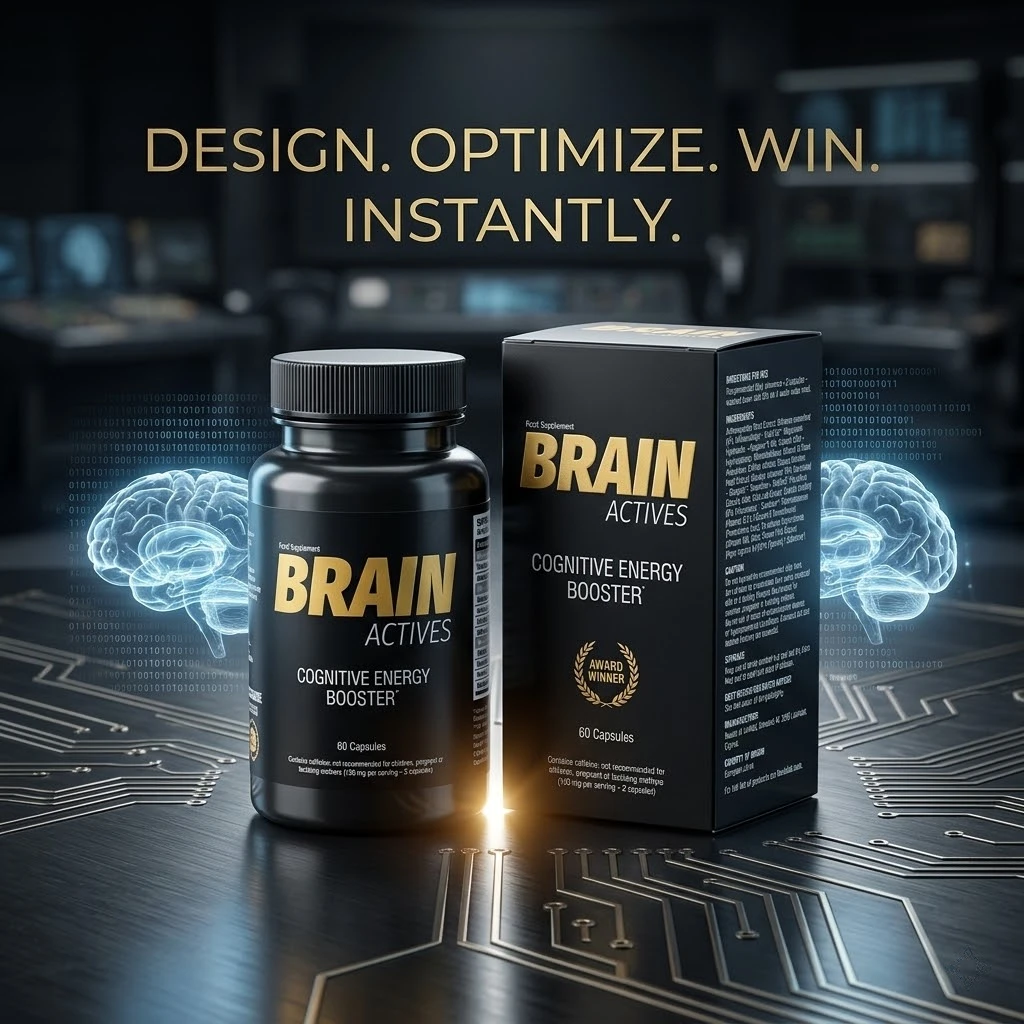
The formula is positioned as a stimulant-light alternative to coffee and energy drinks — useful if you have ever had a caffeine crash at 3pm.
Brain Actives is sold as a 10-ingredient capsule formula through its official store rather than mainstream retail.
A Realistic Timeline: What to Expect and When
Period What most users notice What to be sceptical about
First 60–90 minutes Mild alertness, especially if the blend contains caffeine Assuming this proves the formula works long term
Week 1 Slightly easier task switching for some users Vendor reviews claiming instant transformation
Weeks 2–4 Subtle shifts in focus consistency, if anything Attributing better days to the pill rather than to sleep
Weeks 4–8 The fairest point to judge whether it earns its price Continuing to buy out of habit when nothing changed
Beyond 8 weeks Maintenance, or a decision to stop Open-ended use without any review of results
Track something concrete — hours of focused work, study pages completed, reaction-time scores in a game — rather than relying on a vague feeling of clarity. Without a baseline, you cannot tell improvement from a good night's sleep.
A note on why this timeline is rough rather than exact: almost nothing in a nootropic blend builds up to a "steady state" the way a prescription drug does. Bacopa, for instance, is only studied over multi-week periods; B vitamins act within days if you were deficient and never if you were not. That means the shape of your own results curve depends heavily on which ingredient you were actually short on — which is another reason the four-week mark, and not the first dose, is the fairest judgment point.
A Simple Self-Test: How to Know Whether Brain Actives Is Working for You
Marketing cannot answer the only question that matters — whether this product works for your brain. A short structured test can. Here is a lightweight protocol you can run without any lab equipment:
Pick two metrics, no more. One objective (a reaction-time app, pages read, coding tasks closed) and one subjective (a 1–5 rating of afternoon focus, logged at the same time daily). Three or four metrics sounds thorough and reliably ends up unmeasured.
Baseline for seven days before you start. This step is skipped more often than any other, and skipping it makes the whole exercise pointless — you need a comparison point from the same routine, same sleep, same caffeine.
Change nothing else for the first two weeks. No new workout programme, no new coffee habit, no new bedtime. If everything changes at once, nothing is measurable.
Rate weekly, not daily. Daily scores swing wildly on sleep alone. A weekly average smooths that noise out.
Review at four weeks and again at eight. Keep going only if at least one metric genuinely moved and stayed moved.
A common mistake is letting enthusiasm do the measuring — people start a supplement, sleep better out of sheer optimism, and credit the capsule for the improvement. The second most common mistake is the opposite: expecting a hard, lab-grade effect from a food supplement and declaring it useless when the shift is a two-out-of-ten nudge. Both errors waste money. The self-test exists to keep you honest in both directions.
If you want to run that four-week trial properly, Order Brain Actives from the official store and set your baseline before the first capsule lands — that is the only way the comparison means anything.
What Real Users Report (and How to Read Reviews Critically)
Feedback on the official product pages is largely positive, with recurring themes of reduced brain fog, feeling more present during work, and easier multitasking. A minority describe the effect as subtle and note that it is not a magic pill — which is usually the more trustworthy kind of review.
Read those testimonials with two filters in place. First, reviews hosted on a manufacturer's own store are self-selected; unhappy buyers often ask for a refund rather than write publicly. Second, the placebo effect is genuinely powerful for cognitive supplements, and that is not a criticism of users — it is a reason to look for measurable change in your own routine rather than someone else's anecdote. If you want a comparison point, our breakdown of comparable memory blends shows how similar products are typically positioned and priced.
One more reading tip: pay closest attention to the three-star reviews. Five-star reviews tell you what the product is marketed as, one-star reviews tell you what went wrong for one person, but three-star reviews tend to describe the actual middle-of-the-road experience — "some benefit, not dramatic, probably won't reorder." That is usually the most honest preview you will get of what to expect.
Red Flags in Nootropic Marketing to Watch For
The nootropic category has more hype per dollar than almost any other supplement aisle. These are the signals that should slow you down:
"Clinically proven" with no study named. If a claim cannot be traced to a specific, named human trial on the finished product, it is not clinical proof.
Doctor endorsements without a name or specialty. Look for a verifiable professional or treat the badge as decoration.
Before-and-after testimonials from people with no measurable metric. Focus and memory have objective proxies — scores, timings, completed work. Vague transformation stories are the least falsifiable evidence there is.
Urgency language on a supplement. Fake countdown timers and "last 12 bottles" banners are a sales tactic, not a supply fact, and they signal that the pitch is aimed at impulse rather than consideration.
A single-ingredient headline for a multi-ingredient product. If a page leads on one famous ingredient but the label buries it in a proprietary blend, check whether the dose is close to what the research actually used.
Ignoring everyday focus killers. If your screen time is punishing your eyes, your last meal is at midnight, or your stress levels are running hot all week, no capsule is going to out-perform those factors. Persistent eye strain from long screen sessions is a common and badly underrated cause of late-afternoon concentration collapse, and vision-focused formulas are a more targeted answer to that specific problem than any brain pill.
The general rule: the more concrete, boring and specific a claim is, the more likely it is to be true. "Supports normal cognitive function" is a weak claim, but it is an honest one. "Unlocks 100% of your brain" is memorable, which is exactly why you should distrust it.
Brain Actives vs. Caffeine Pills, Energy Drinks and Other Nootropics
Option Speed of effect Duration Crash risk Cost per serving
Brain Actives Gradual to moderate Several hours Lower Premium
Caffeine tablet Fast 3–5 hours Moderate to high Very low
Energy drink Fast 2–4 hours High (sugar + caffeine) Low
Single-ingredient nootropic Varies Varies Low Low to moderate
Caffeine is cheap, well studied and effective for short-term alertness — there is no reason to pretend otherwise. The case for a product like Brain Actives is that it targets nutrient and neurotransmitter support rather than raw stimulation, which may suit people who cannot tolerate caffeine well. The case against it is cost: you are paying a premium for convenience and a blend you cannot fully audit.
The most useful way to think about this comparison is not "which is stronger" but "which failure mode can I live with." Caffeine's failure mode is overstimulation — jitters, anxiety, a 4pm dip, wrecked sleep if taken late. A nutrient-and-adaptogen blend's failure mode is quieter: you spend premium money and feel essentially nothing. If your history says you tolerate caffeine badly, the second failure mode is the more acceptable trade. If your history says caffeine works fine for you, the cheaper option is simply the smarter buy — and no nootropic marketing changes that arithmetic.
Price, Availability and Avoiding Counterfeits
Brain Actives is distributed through its official website, usually with multi-bottle discounts and a money-back window. That direct-only model has a genuine upside — you know what you are getting — and one downside: there is no easy high-street refund if you dislike it.
Two practical tips. Check the returns policy before you buy, and photograph the seal and batch number when the parcel arrives. If a marketplace listing offers the same product at a steep discount, treat it as a different product, because that is what it usually is.
Do the per-serving maths before you commit, too. Multi-bottle bundles almost always have the lowest headline price per capsule, but they also lock in the largest total spend on a product you have not yet tested. A sensible compromise for a first purchase is the smallest single-bottle option, even at a slightly worse unit price — you are paying a small premium to buy information about whether the product works for you. Once you know, the larger bundles become a rational reorder rather than a gamble. Also check whether the money-back window is measured from the order date or the delivery date; if you are ordering internationally, that difference can matter more than the discount.
Ready to test it on your own routine? Order Brain Actives from the official store and give it a full four weeks against a written baseline before you decide.
Safety, Side Effects and Interactions
Nootropic blends are generally well tolerated, but "natural" does not mean risk-free. The most common complaints are mild: headaches, digestive discomfort, restlessness if taken too late in the day. If you are caffeine-sensitive, take the capsule before midday.
Three cautions matter more than the rest:
Medication interactions. Herbal components can affect how the body processes prescription drugs. Blood thinners, thyroid medication and antidepressants are the usual suspects. Ask a pharmacist before combining anything.
Pregnancy and nursing. Most nootropic blends are not studied in these groups. Skip unless your doctor says otherwise.
Underlying conditions. If you are constantly exhausted or foggy, that is a signal to investigate, not to supplement over. A thyroid check, a sleep study or a simple blood panel may be the real answer. For general background on supplement safety and dosing, the federal guidance on dietary supplements from the NIH Office of Dietary Supplements is a solid, non-commercial starting point.
Stop use and speak to a clinician if you develop persistent headaches, palpitations, anxiety or insomnia.
One practical habit closes most of the remaining safety gap: keep a simple written log of what you take and when. If a symptom appears three weeks in, the log tells you whether the timing lines up with the supplement or with something else entirely. It also gives your pharmacist or doctor something concrete to work from instead of a vague recollection — and if you ever do need to report a suspected adverse reaction, a clear timeline is exactly what a regulator will ask for.
How to Get More From Brain Actives: Seven Practical Habits
A capsule works best when it is not carrying the whole load. These habits deliver the biggest measurable return on cognitive performance — most of them for free.
Protect your sleep window. Seven to nine hours, consistent timing. If snoring or disrupted breathing is part of the problem, look at better overnight recovery before blaming your focus.
Take the capsule at the same time daily. Consistency is what allows any active ingredient to build up. If you routinely forget doses, fix your correct capsule timing habits first.
Eat protein at breakfast. Amino acid precursors need a supply chain; a protein-containing first meal supports that. If you struggle to hit your intake, this well-researched compound is one of the few supplements with credible evidence for both muscle and cognitive support.
Hydrate deliberately. Even mild dehydration degrades attention before you consciously notice it.
Manage your stress load. Chronic cortisol exposure is one of the most reliable focus-killers there is. Structured breathing or a targeted everyday tension levels routine does more than most pills.
Move daily. Twenty to thirty minutes of aerobic exercise has stronger evidence for cognitive benefit than any over-the-counter nootropic.
Review after four weeks. Write down what changed, what did not, and whether the cost is justified. Then decide.
If that list looks unglamorous, that is the point. Nootropic marketing sells the idea of a shortcut, but the honest ranking of influences on daily focus runs roughly: sleep, stress, hydration, movement, nutrition, and then supplements. A capsule taken on top of a solid routine is a small multiplier. A capsule taken instead of that routine is a rounding error. Most people who feel genuinely sharper after a month of nootropic use have also accidentally fixed two or three items higher up that list — and the improvement is real, even if the credit is misplaced.
Frequently Asked Questions (FAQ)
How should I take Brain Actives?
Follow the dosage printed on the label, typically with water and a meal so the ingredients are absorbed alongside food. Morning or early afternoon is the usual recommendation, since later dosing can interfere with sleep. Consistency beats timing precision — set a daily alarm rather than relying on memory.
Are there any side effects?
Most users report none. The realistic list includes mild headache, stomach discomfort, and restlessness in stimulant-sensitive people. If you take prescription medication, have a thyroid condition, or are pregnant or nursing, speak to a healthcare professional before starting. Do not stack it with other stimulant products without checking the total caffeine load.
How long does it take to see results?
Subjective alertness may appear within the first hour or two for some users. Anything relating to memory or learning speed is typically a two-to-four-week question, and even then the change is usually modest. If nothing has shifted after eight weeks of consistent use, the honest answer is that this product is probably not doing much for you.
Can I use Brain Actives for sports?
Yes, many athletes use nootropics for alertness and reaction time, and the product is marketed partly on that basis. Just be realistic: hydration, sleep and training load will affect your reaction time far more than a capsule. Check the label for any ingredient banned by your sport's anti-doping rules before competing.
Is Brain Actives safe to take with coffee?
It depends on the blend's caffeine content. If it already contains caffeine or green tea extract, adding coffee can push you past your comfortable threshold and trigger jitters or a late-afternoon slump. Start with the capsule alone for a week, then reintroduce coffee and judge how you feel.
Is Brain Actives a treatment for ADHD or memory loss?
No. It is a food supplement, not a medicine, and it has not been evaluated by the FDA for treating any condition. If you are dealing with diagnosed ADHD, persistent memory problems or suspected cognitive decline, that is a conversation for a qualified clinician, not a supplement aisle.
Where is the best place to buy it?
Through the manufacturer's official store. Third-party marketplace listings are the most common source of counterfeit or expired stock, and buying grey-market also usually voids your refund rights. Order direct, keep the receipt, and photograph the batch number on arrival.
What happens if I miss a dose?
Do not double up. Take the next scheduled dose at your normal time and carry on — the ingredients in this type of blend are not dosed in a way that makes a missed capsule worth compensating for. If you find you are missing doses two or three times a week, the real problem is the routine, not the formula: move the bottle somewhere you cannot avoid seeing it, or pair the dose with a fixed daily action such as breakfast or brushing your teeth.
Can I take Brain Actives long term?
There is no established long-term safety data for this specific blend, and that uncertainty is genuine rather than alarming. Most users who continue past the first bottle do so on a cycle — a few weeks on, a short break off — precisely because it resets their baseline and lets them check whether the benefit is still real. Whatever pattern you choose, review it every eight to twelve weeks instead of reordering on autopilot, and stop if you notice any new symptoms that coincide with use.
How should I store the capsules?
Keep them in the original sealed bottle, somewhere cool and dry, away from direct light and out of the bathroom — humidity is harder on capsules than temperature is. Note the expiry date on arrival and write it on your calendar so it does not quietly pass. If the capsules clump, discolour or smell off, discard them rather than finishing the bottle.
Final Verdict
Brain Actives is a well-packaged, plausible nootropic built on recognisable ingredient categories — neurotransmitter precursors, circulation support and energy metabolism. It is convenient, generally well tolerated, and positioned honestly enough to acknowledge that results are gradual rather than instant.
What it is not is proven. There is no public clinical trial on the finished blend, the proprietary format makes under-dosing hard to rule out, and the benefits users describe are the same ones that good sleep and regular exercise reliably produce. At a premium price, that gap matters.
Our recommendation: if you already sleep well, train regularly and eat properly, Brain Actives is a reasonable experiment — buy one bottle, track a concrete metric for four weeks, and keep it only if the numbers move. If your focus problems trace back to five hours of sleep and three coffees a day, spend the money on fixing those first. That is the boring answer, and it is also the one that works.
Medical Disclaimer: This information is provided for educational purposes only and does not constitute medical advice. Always consult a qualified health professional before starting any new supplement regimen. These statements have not been evaluated by the Food and Drug Administration.
About the Author: Jessica Jacobs is a health and wellness researcher who analyses modern supplements through a lens of scientific integrity and user-focused data.

Similar Posts