Green Barley Plus Review: Does It Work? How to Take Green Barley Plus for Best Results
Certified Strength & Conditioning Specialist (CSCS) & Lead Reviewer at Go Fit Base · CSCS (NSCA), CISSN (Sports Nutritionist) · 8+ Years Fitness & Sports Nutrition Coaching
Title: Green Barley Plus Review: Does It Work? How to Take Green Barley Plus for Best Results
Greens powders are easy to buy and hard to judge. The label promises energy, digestion support, and a flatter stomach, but most people never figure out whether the product is working or whether they're just drinking expensive lawn clippings.
Green Barley Plus sits in that crowded category, but with a twist: it pairs green barley grass with Garcinia cambogia, positioning itself as a slimming and cleansing formula rather than a plain multivitamin top-up. That combination is exactly why it deserves a closer look — and why the "how" matters as much as the "what."
This review covers what's actually in the formula, which claims are realistic, which are marketing, and a practical, repeatable routine for taking Green Barley Plus so you can tell within a few weeks whether it's worth continuing.
What Is Green Barley Plus?
Green Barley Plus is a powdered (and sometimes capsuled) dietary supplement built around two headline ingredients:
Green barley grass — young barley leaves harvested early, then dried and milled. The powder is naturally high in chlorophyll, insoluble and soluble fiber, and a range of vitamins and minerals, along with enzymes that survive only if the powder is never heated.
Garcinia cambogia — a tropical fruit rind extract standardized to hydroxycitric acid (HCA), the compound most often linked to appetite and fat-metabolism claims.
According to the manufacturer's label, the goal is a two-in-one product: a nutrient-dense greens drink for daily maintenance, plus a mild appetite-modulating agent for people watching their weight. That dual positioning is what separates it from a basic barley grass powder you'd buy in bulk.
One important framing note before we go further: the FDA treats supplements like this as food, not medicine. Under the FDA's dietary supplement framework, a product can be sold without ever proving it works. That doesn't make Green Barley Plus useless — it means the burden of judgment falls on you, the buyer, which is what the rest of this review is for.
Ingredients at a Glance
Component What It Contributes Evidence Strength
Green barleygrass Fiber, chlorophyll, antioxidants, trace vitamins/minerals Good for general nutrition and digestive bulk
Garcinia cambogia (HCA) Appetite signaling, possible mild fat-metabolism effect Mixed — human trials show modest and inconsistent results
Added fiber blend Satiety, regularity Strong for fullness, not for fat loss on its own
Enzymes (if listed as active) Aids breakdown of food in the gut Plausible but easily destroyed by heat
If your specific tub doesn't list Garcinia or a standardized HCA percentage, treat it as a plain greens powder and judge it on that basis alone.
Reading the Label Without Getting Fooled
In practice, three details separate a serious formula from a decorative one. First, ingredient order: barley grass should sit at the top of the list, ahead of flavoring and sweetener, because ingredients are listed by weight. Second, the HCA figure — a standardized extract states a percentage (commonly around 50–60% hydroxycitric acid) or a milligram amount per serving, whereas "Garcinia cambogia fruit extract" with no number is a rounding error, not an ingredient. Third, do the serving arithmetic before you assume you're buying a month's supply.
A common mistake is buying on the strength of the front panel. The front panel is advertising; the supplement facts panel and the ingredient list are the contract. Photograph both before you open the tub, because once the packaging is gone you have no way to check what you thought you bought.
Does Green Barley Plus Actually Work?
The honest answer is: it works as a supporting tool, not as a cause. Here's how to think about each claim.
The barley grass side
Barley grass is a genuinely nutritious plant food. It delivers fiber that feeds gut bacteria, and it's a convenient way to add volume and micronutrients to a diet that's short on vegetables. In practice, the people who notice the biggest difference are the ones who were eating almost no greens beforehand.
What barley grass is not is a fat burner. There is no credible mechanism by which chlorophyll dissolves stored body fat. Its contribution to weight management is indirect: fiber takes up space in the stomach, slows digestion slightly, and helps you feel satisfied on fewer calories.
The Garcinia cambogia side
This is where the marketing gets ahead of the science. HCA has been studied in humans, and results have been inconsistent — some trials report small reductions in body weight or appetite, others find no meaningful difference from placebo. A common mistake is assuming "clinically studied" means "clinically proven." It doesn't.
There's also a safety angle worth knowing: regulators have flagged rare liver-related adverse events reported with Garcinia-containing supplements. That's not a reason to panic, but it is a reason to buy from a brand with transparent labeling, to avoid stacking multiple Garcinia products, and to stop use and speak to a doctor if you develop fatigue, nausea, dark urine, or yellowing of the eyes or skin.
If you're comparing this to other botanical slimming products, it helps to understand how often those formulas disappoint — the same pattern shows up in botanical extracts marketed for slimming and in how berry cleanses can backfire with digestive upset.
The people who get the most out of an HCA-containing formula are rarely the ones chasing a bigger dose — they're the ones taking a modest, consistent amount alongside protein-forward meals. There's no reliable evidence that doubling HCA intake doubles the effect, and the gastrointestinal and liver signals regulators have flagged show up more often in products that stack several extracts or push high daily totals. If you already take a stimulant-based fat burner, a thyroid formula, or anything prescribed for blood sugar or cholesterol, add Green Barley Plus one variable at a time rather than dropping it into an existing stack.
What "detox" really means here
Chlorophyll and enzymes do not "flush toxins." Your liver and kidneys do that, continuously, without assistance. What a greens powder can realistically do is support the systems that already do the work: fiber feeds a healthier gut microbiome, adequate fluid keeps things moving, and better digestion means less bloating and more regular bowel habits.
So when a label claims deep detoxification, translate it in your head to: "supports regular digestion and hydration." That's a real benefit — just a less dramatic one.
The practical test is simple: if a product promises to remove something from your body, ask which organ performs that job and whether the ingredient has ever been shown to change how well that organ performs. For chlorophyll, enzymes, and fiber, the honest answer is that they support digestion and hydration rather than driving elimination. It's also why a greens powder tends to help most when your baseline is poor — low fiber, low water, irregular meals — and helps least when your baseline is already solid.
Key Benefits: What's Realistic to Expect
Better digestive comfort. Most users notice this first. Less bloating, more predictable bathroom habits, especially if their fiber intake was low before.
Reduced snacking. Partly fiber, partly the ritual of drinking something before a meal. Real, but modest.
Steadier energy. No stimulants means no crash — but also no dramatic buzz. Think "less afternoon slump," not "pre-workout."
Nutrient top-up. Helpful on days when vegetables don't happen.
Skin, hair, and nail support. Plausible if you were deficient in the relevant micronutrients; unremarkable if you weren't.
What it won't do: replace a calorie deficit, offset a poor diet, or produce visible fat loss on its own.
It's worth separating the benefits you'll feel from the ones you'll see. Digestive comfort and reduced snacking are felt benefits — they show up in how you feel after meals and how often you reach for something at 9 p.m., and they're the reason most people keep taking a greens powder at all. Nutrient top-up and skin or hair support are seen benefits: slow, conditional, and easy to attribute to something else. A useful rule of thumb — if you can't describe the change in one sentence to a friend, it probably isn't a change yet.
What to Expect Week by Week
Timelines are where supplement marketing and supplement reality diverge most, so here's a grounded version based on how fiber and appetite-related ingredients actually behave in the body.
Week 1: The gut adjusts. Some people feel lighter; many feel gassier. If you started at one level teaspoon, this is usually mild. Fluid intake is the single biggest lever here.
Week 2: Regularity typically settles, and bloating caused by slow transit often improves. This is also when most people decide whether the taste is tolerable.
Weeks 3–4: Appetite effects, if they're coming, show up now — usually as a smaller evening appetite rather than a dramatic loss of hunger. Waist measurements start to mean more than daily weight readings.
Weeks 5–8: Any body-composition change by this point is being driven by your diet and training. What the powder can do is make the calorie deficit more comfortable.
Beyond 8 weeks: Reassess honestly. If nothing measurable has moved, the product isn't your bottleneck.
Two caveats worth stating plainly. If you're also using a mental clarity formula alongside it, don't credit the greens powder for changes that product may be producing. And if what you actually want is a steadier energy curve without caffeine, non-stimulant energy support is a separate category worth understanding on its own terms — mixing categories makes it impossible to tell what's working.
Who Should Use Green Barley Plus?
It tends to suit:
People already eating reasonably well and training consistently who want to close a fiber and micronutrient gap.
Anyone who struggles with appetite in the evening and wants a low-calorie buffer before dinner.
People who dislike swallowing capsules and prefer a drink they can build into a morning routine.
It's a poor fit for:
Anyone expecting weight loss without changing what they eat.
People taking diabetes or cholesterol medication, or with a history of liver issues — check with a pharmacist or doctor first.
Pregnant or breastfeeding women, and anyone under 18.
People who've already had a bad reaction to Garcinia-containing products.
How to Take Green Barley Plus for Best Results
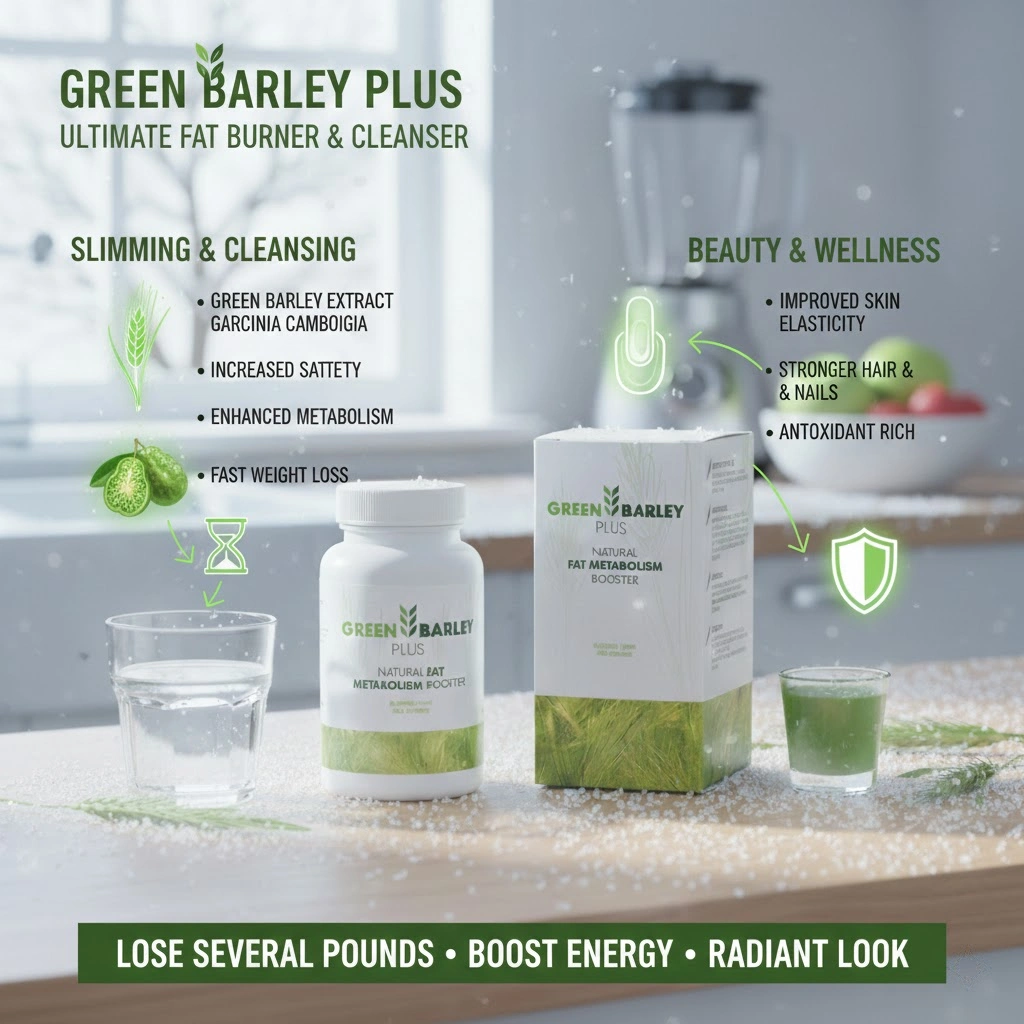
One level teaspoon in 8–12 oz of cold water is the starting point — not a heaped scoop.
Cold or room-temperature liquid only — heat is the fastest way to ruin a greens powder.
1. Best Time to Take It
The most useful window is 20–30 minutes before your largest meal , usually breakfast or lunch, on an empty or near-empty stomach. Two reasons: fiber needs a little time to absorb liquid and expand, and taking it before the meal is when appetite-blunting effects actually matter.
If your mornings are chaotic, before dinner works nearly as well — and for many people it's the difference between taking it consistently and not taking it at all. Consistency beats perfect timing. The same principle applies to when to schedule each dose of any capsule-based supplement.
Avoid taking it within about 30 minutes of thyroid medication, and separate it from other medications by an hour or two, since fiber can reduce absorption of some drugs.
2. Dosage Instructions
Powder: start with 1 teaspoon (roughly 3–5 g) in 8–12 oz of liquid for the first 3–5 days, then build toward 1–3 teaspoons daily as tolerated.
Capsules: follow the label, typically 1–3 capsules once or twice daily, each with a full 8 oz glass of water.
Starting low matters. Jumping straight to a triple dose is the single most common reason people quit in week one — the bloating and gas that follow are entirely predictable when you triple your fiber overnight.
The same escalation logic applies to almost every capsule or powder you add to a routine — ramping up a new supplement slowly and holding a dose for a few days before increasing it is what separates a routine that lasts from one that stalls in week one. And if you take other fiber sources — psyllium, chia, a high-fiber cereal — count them. Total daily fiber is what matters, not the fiber from any single product.
3. Preparation Tips That Protect the Formula
Never use hot liquid. Heat denatures the enzymes the product is built around. Cold water, chilled juice, or a smoothie base only.
Stir, then wait 60 seconds. Barley grass powder clumps; a short rest lets it hydrate and mix smoothly.
Mask the grassy taste with half a banana, a few frozen berries, or a spoon of yogurt. Citrus juice works well too.
Drink it, don't sip it for an hour. Fiber sitting in liquid gets thick and unpleasant.
Liquid choice matters more than most people expect. Water is the cleanest base; milk or a yogurt-based smoothie buffers the grassy flavor but adds calories that may work against an appetite-control routine. If you use juice, choose one with actual fiber and no added sugar, and count those calories as part of your day rather than as a free extra.
4. Common Mistakes to Avoid
Taking it with coffee on an empty stomach and then wondering why you feel jittery and hungry by 10 a.m.
Measuring by "heaped spoon" rather than level — you'll overshoot the dose without realizing it.
Adding it to hot oatmeal or tea. The nutrients don't disappear, but the enzyme activity does.
Judging it after four days. Fiber-based effects need one to two weeks to settle.
The mistake that costs people the most isn't any single item on that list — it's inconsistency disguised as judgment. Taking it four days out of seven for three weeks and then concluding it "didn't work" tells you nothing, because the product was never given a fair trial. Pick a time, put the tub where you'll see it, and log it. If you can't remember whether you took it yesterday, the routine is the problem, not the powder.
5. How to Tell If It's Working
Track four things, once a week, at the same time of day:
Waist measurement at the navel.
Average body weight across the week (daily readings averaged, not a single weigh-in).
Bowel regularity and bloating score, 1–5.
Evening craving intensity, 1–5.
If two or more of those are improving after four weeks alongside a sensible diet, keep going. If nothing has moved, the product isn't the variable that needs changing.
6. What to Do If Nothing Changes After a Month
Before you buy another tub or switch products, run through this short checklist. It catches the real cause the overwhelming majority of the time.
Were you actually consistent? Count servings taken versus servings expected. Most "it didn't work" cases are adherence problems, not formula problems.
Was your fluid intake adequate? Fiber without enough water can make bloating worse rather than better.
Did your diet change at all? A greens powder amplifies a calorie-controlled, protein-forward pattern; it can't create one.
Are you measuring the right thing? Weekly waist measurements and averaged weight beat a single scale reading taken at a random hour.
Is something else working against you? Poor sleep and unmanaged stress move appetite more than any powder. If that's the gap, look at managing everyday stress and your sleep routine before adding another supplement.
Are you stacking too much? Two appetite-suppressing products at once make it impossible to attribute anything to either one.
If you've worked through that list and nothing has changed, the honest conclusion is that this formula isn't the right fit for you — and that's useful information, not a failure.
Pros and Cons
Pros
Combines fiber and micronutrients in one convenient serving.
Stimulant-free, so it won't disrupt sleep or cause a caffeine crash.
Flexible formats — powder for smoothies, capsules for people who hate the taste.
Pairs easily with a protein shake or a structured training plan.
Cons
Earthy, grassy flavor that many people never get used to.
Garcinia evidence is mixed, and rare liver-related reports exist.
Requires daily consistency and a real diet to produce visible results.
Fiber load can cause gas and bloating if you ramp up too fast.
The trade-off at the center of this product is speed versus tolerability. A stimulant-based fat burner produces a noticeable effect within days, which is exactly why people keep buying them — and exactly why they're hard to stay on. Green Barley Plus sits at the opposite end: subtle, sustainable, and easy to dismiss because nothing dramatic happens in week one. Knowing which of those two experiences you actually want makes the decision much simpler.
User Feedback: What People Actually Report
Across review threads and retailer comments, the pattern is fairly consistent.
What comes up most often: improved digestion within the first week, feeling "lighter," and less late-night snacking. A smaller group reports clearer skin and steadier energy after three to four weeks.
What people complain about: the taste of the powder, mild gas during the first few days, and disappointment from users who expected the supplement to do the work of a diet. A recurring theme in negative reviews is that nothing changed — and on closer reading, nothing else in their routine changed either.
A practical takeaway from that pattern: buy the capsule format if you know you won't tolerate the flavor, and give it a full month before deciding.
One pattern worth naming: the most detailed negative reviews usually describe a genuine mismatch — someone who wanted a fat burner and received a fiber supplement. The most credible positive reviews describe something modest and specific, like fewer late-night snacks or more predictable mornings. When you're reading reviews for any greens product, weight the specific over the dramatic; the dramatic ones are usually describing something else entirely.
Green Barley Plus vs. Green Coffee vs. Tea Detox Products
Feature Green Barley Plus Green Coffee Tea Detox
Primary goal Fiber, nutrition, appetite support Metabolic stimulant Short-term water loss
Star ingredient Barley grass + Garcinia Chlorogenic acid + caffeine Green tea, often senna
Fiber content High None or low Low
Stimulant load None Moderate to high Varies
Suitable for daily long-term use Yes Often cycled Not recommended beyond a few days
Beauty/nutrient support Vitamins, chlorophyll Antioxidant only Minimal
Two things worth flagging. First, if you're sensitive to stimulants or prone to anxiety, the drawbacks of stimulant blends are worth reading up on before you swap in a caffeinated option. Second, many tea detoxes rely on laxatives — useful for a few days, genuinely unhelpful and potentially dehydrating beyond that. Green Barley Plus is the gentler, slower option; it just won't deliver a dramatic overnight drop on the scale.
Green Barley Plus vs. Other Greens Powders
Most greens powders look identical on the shelf. The differences that matter are structural, not cosmetic.
| What to compare | Green Barley Plus | Plain barley grass powder | "Kitchen-sink" greens blends |
|---|---|---|---|
| Core purpose | Fiber and micronutrients with a mild appetite angle | Fiber and micronutrients only | Broad nutrient coverage, minimal fiber |
| Appetite ingredient | Garcinia (HCA), standardized or not | None | Usually none |
| Stimulants | None | None | Sometimes hidden inside "energy" blends |
| Fiber per serving | High | High | Low |
| Taste | Grassy, needs masking | Grassy | Heavily sweetened |
| Relative cost per serving | Mid-range | Low | High |
| Best fit | Evening-craving support alongside a diet | Straightforward nutrient top-up | People who want one broad supplement |
The honest read: if all you want is fiber and chlorophyll, a plain barley grass powder does the same job for less money. Green Barley Plus earns its price only if the appetite angle is something you actually need — and that's a question only your own tracking can answer. If it is, check the current label and pricing on the official page so you can confirm the HCA percentage before you commit.
Where greens powders and protein powders get confused is in the morning slot. They aren't interchangeable: protein delivers amino acids and satiety at roughly 20–30 g per serving, while greens deliver fiber and micronutrients for a fraction of the calories. If your goal is to stay full until lunch, protein does more of the work; if your goal is regularity and vegetable-equivalent nutrients, greens do. Plenty of people use both, which is fine — as long as you're not counting the same benefit twice.
7-Day High-Fiber, High-Protein Meal Plan
Pair the supplement with meals that reinforce what it's doing: protein for satiety, fiber for digestion, and enough volume that you're not hungry an hour later.
Day Breakfast (30 min after your serving) Lunch Dinner
1 Greek yogurt with berries and almonds Grilled chicken wrap on whole wheat Lean turkey sliders with sweet potato wedges
2 Spinach and feta egg-white omelet Quinoa and black bean salad Baked lemon-pepper salmon with asparagus
3 Overnight oats with chia seeds Leftover salmon over mixed greens Stuffed peppers with ground turkey and cauliflower rice
4 Protein smoothie with spinach and peanut butter Tuna salad with avocado, no mayo Grilled chicken breast with roasted broccoli
5 Scrambled eggs with sliced tomato Lean roast beef wrap with mustard Air-fried chicken tenders with almond-flour breading
6 Cottage cheese with pineapple Shredded chicken burrito bowl, no rice Lean steak strips with sautéed peppers
7 Whole-grain toast with avocado and egg Leftover steak salad Baked cod with zucchini noodles
Why this works: each meal lands in the 25–40 g protein range, which is roughly where satiety benefits plateau. Most adults also fall short of the fiber the dietary guidelines suggest, so the vegetables, oats, beans, and berries here are doing quiet, unglamorous work.
Strategy for Success
Anchor it to an existing habit. Put the tub next to your coffee maker or water glass. If it's visible, you'll take it; if it's in a cupboard, you won't.
Batch your water. Aim for 2–3 liters a day. Fiber without fluid is the fastest route to constipation, not regularity.
Cook with methods, not willpower. Baking and air-frying instead of deep-frying keeps meals satisfying without gutting the calorie budget.
Add resistance training two to three times a week. Preserving muscle while losing fat is what makes the result look like a change rather than just a smaller number. A daily creatine routine is one of the simplest ways to support that.
Support the boring stuff too. Getting better sleep and managing stress both influence appetite more than most supplements do.
If you're using a protein shake as your breakfast base, a low-lactose protein option mixes cleanly with greens powder and won't turn gritty.
If you're training while you run this routine, the supplement order matters far less than the training itself. Two or three full-body sessions a week, each built around a compound lift plus a push and a pull, is enough to protect muscle in a deficit — and strength-focused training aids are only worth considering once that base is in place. Build the habit first; optimize the stack second.
Safety, Side Effects, and Interactions
Common and temporary: gas, bloating, looser stools, and mild abdominal cramping during the first three to seven days. These usually fade as your gut adjusts.
Less common but worth watching: acid reflux, headache, or a noticeable drop in appetite to the point of under-eating.
Stop and speak to a doctor if you experience unexplained fatigue, nausea, dark urine, or yellowing of the skin or eyes. These are rare but have been reported with Garcinia-containing products.
Interactions to respect: fiber can reduce absorption of some medications, including thyroid medication and certain antibiotics. Garcinia may interact with diabetes and cholesterol medications. Take supplements at least an hour apart from prescriptions and confirm with a pharmacist — it's a five-minute conversation that prevents most problems.
For general nutrient reference values and safety information, the NIH Office of Dietary Supplements is a reliable, non-commercial starting point.
Thyroid medication is the interaction people most often miss, because poor absorption creeps in slowly rather than announcing itself. Fiber and levothyroxine are a well-documented mismatch, and the conservative spacing most pharmacists recommend is four hours rather than the half hour you'll sometimes see quoted. If you're already managing thyroid function support with a prescription or a supplement, raise this product with your prescriber at your next visit rather than guessing at the timing — and don't change both your dose and your supplement routine in the same week.
Where to Buy and What to Check First
Buy from the official source rather than a marketplace listing, and check three things before you pay:
A complete ingredient panel with amounts, not a "proprietary blend" hiding everything behind one number.
A standardized HCA percentage if Garcinia is included, so you know what you're actually getting.
A batch or lot number and a clear return policy, in case the taste doesn't work for you.
Check current pricing and availability on the official Green Barley Plus page — buying direct also makes returns and authenticity checks far simpler.
Storage, Shelf Life, and How to Spot a Bad Batch
Greens powders lose quality faster than most supplements, for one reason: the things you're paying for — enzymes, chlorophyll, delicate micronutrients — are sensitive to heat, light, moisture, and oxygen. A few practical rules go a long way.
Keep the tub sealed, in a cool cupboard, away from the stove, the kettle, and any sunny windowsill. A bathroom cabinet is a poor choice because of the humidity swings.
Use the scoop dry. A wet scoop introduces moisture into the whole tub and can turn the powder clumpy and off-smelling within weeks.
Note the date you opened it, not just the printed shelf life. An opened tub at month six is not the same product it was in week one.
Judge by smell and texture as well as the date. Fresh barley grass smells faintly grassy and sweet; a musty, sour, or sharply bitter smell means it has degraded. Clumps that won't break up with a shake are a moisture problem.
Don't pre-mix. A ready-made bottle of greens in the fridge is a far better environment for spoilage than dry powder is.
If your tub arrives warm, damaged, or with a broken seal, ask for a replacement rather than using it — heat exposure in transit is precisely the condition that degrades this type of product.
FAQ: Green Barley Plus Questions Answered
How long does it take to see results?
Digestive changes — less bloating, more regular habits — usually show up within 7 to 10 days. Appetite and body-composition changes take longer and depend mostly on your diet. Give it a full 4 to 8 weeks of consistent use before deciding whether it earns a place in your routine.
Can I mix the powder with food?
Yes. Sprinkle 1–2 teaspoons over a salad, into cold yogurt, or into overnight oats. The one rule is temperature: don't stir it into hot soup, oatmeal, or tea, because heat destroys the enzyme activity the powder is prized for.
Can I take it while intermittent fasting?
The powder contains calories, so it breaks a strict fast. If you're fasting for metabolic reasons, take it at the start of your eating window instead. If you're fasting simply to control intake, taking it before your first meal usually works in your favor.
A practical detail: a serving of greens powder is typically small enough that it won't meaningfully blunt the benefits of a fast if your goal is simply eating fewer calories overall, but it will break a strict water-only fast for autophagy or gut-rest purposes. Decide which kind of fasting you're doing before you decide whether the timing works.
Are there side effects?
Mild bloating, gas, and looser stools are the most common complaints, usually in the first few days and usually the result of starting at too high a dose. Ramp up slowly and drink enough water. Rare liver-related events have been reported with Garcinia-containing supplements, so stop use and seek medical advice if you feel unwell.
Is Green Barley Plus safe during pregnancy or breastfeeding?
No supplement like this should be started during pregnancy or while nursing without explicit medical clearance. Garcinia in particular lacks safety data for these groups. Talk to your doctor or midwife first.
Can I take it at night?
You can — it's stimulant-free, so it won't keep you awake. Some people prefer it 20–30 minutes before dinner to take the edge off evening cravings. If you find it causes reflux when lying down, move it earlier in the day.
Do I need to cycle off it?
Not strictly, but many users take one or two days off per week to keep fiber intake from climbing too high. If you're also using other high-fiber or botanical slimming products, spread them out rather than stacking them.
Can I take it alongside a multivitamin?
Yes, and for most people it's harmless. But watch total intake rather than assuming more is better: a greens powder plus a multivitamin plus a fortified cereal plus a protein shake can quietly push certain micronutrients — fat-soluble vitamins and some minerals in particular — well above what your body needs. Check the amounts on each label and add them up before you assume the combination is free.
Does the capsule version work as well as the powder?
The active ingredients are the same, so the difference is mostly practical. Capsules are easier to take consistently and eliminate the taste problem entirely, but you swallow a fixed dose and you don't get the pre-meal liquid volume that contributes to fullness. Powder gives you a larger, more flexible serving and the ritual of drinking something before a meal, which is part of why it works for appetite control. Pick the format you'll actually use daily — adherence beats a marginal difference in delivery.
Will it work if I don't change my diet?
No. This is the single most common source of disappointment with greens and slimming powders generally. The fiber can make a calorie deficit more comfortable, and the appetite angle can help you stick to one, but the deficit still has to exist. Without a change in what you eat, the realistic ceiling is better digestion and a nutrient top-up — worthwhile, but not weight loss.
Final Verdict
Green Barley Plus is a solid greens-and-fiber supplement wearing a weight-loss costume. Judged on nutrition, digestive support, and appetite management, it does what it claims for most people who take it consistently. Judged on fat burning, it's a supporting actor — the Garcinia evidence is mixed, and no powder will outwork a diet that isn't dialed in.
It's worth trying if you want a convenient way to raise your fiber and micronutrient intake, you struggle with evening snacking, and you're already eating and training with some structure.
Skip it if you're looking for a shortcut, you've reacted badly to Garcinia before, or you're on medication that interacts with fiber or HCA without medical clearance.
The routine that gets the best results is unglamorous: one serving 20–30 minutes before your biggest meal, cold liquid only, 2–3 liters of water daily, and a month of consistency before you judge it. Do that, track your waist and your cravings, and you'll have a clear answer instead of a guess.
See the current Green Barley Plus offer and label details here.
This review is for informational purposes only and is not medical advice. Supplements can interact with medications and are not appropriate for everyone. Speak with a qualified healthcare professional before starting Green Barley Plus, especially if you are pregnant, nursing, managing a chronic condition, or taking prescription medication.
Keep Building on These Results
A greens powder rarely changes anything on its own. It works when it's one habit inside a routine that already has protein, movement, and sleep handled — so if you want the results to hold, the next steps matter more than the powder itself.
If breakfast is where your serving lands, pairing it with a shake is the simplest upgrade. Before you commit to a tub, it's worth comparing purity and mixability across the main categories of protein powder, because a gritty or heavily sweetened shake is the reason most people quietly stop making them.
For everyday use, mixing smoothly into shakes matters more than any marginal difference in grams per scoop — you'll drink it more often, and consistency is what actually moves the needle. Low-lactose options also sit better alongside a high-fiber supplement, particularly in the first week while your gut is adjusting.
On the training side, supporting lean mass while you're in a calorie deficit is what keeps the result looking like a change in shape rather than just a smaller number on the scale. Two to three resistance sessions a week is enough; the supplement just makes that work slightly more productive.
If you prefer capsules over powder, the habits around them matter too — capsule timing habits like taking them with a full glass of water and keeping them away from prescription medication apply to almost every supplement in this category, not just this one.
And if you're tempted to stack Green Barley Plus with a caffeinated fat burner to speed things up, read up first on what a caffeine-heavy formula can do before you combine them. Doubling up on stimulants is one of the most common mistakes people make in the first month, and it's the fastest way to turn a gentle, sustainable routine into jitters, poor sleep, and a rebound in appetite.

Similar Posts


















[…] your goal is maximum metabolic support, Green Coffee 5K offers a potency that few other brands match. By utilizing a 5000mg equivalent, it ensures you […]
[…] Green tea contains EGCG, a compound that triggers thermogenesis. This is the process of your body burning calories to produce heat. By taking Silvets before a meal, you are essentially pre-heating the oven. […]
Downloaded the app and it runs like butter on my phone. Quick deposits, fast withdrawals and the live dealer section feels just like stepping into a real resort floor. The support team even guided me toward a fair starter bonus earlier this week. rejekibetapk